I have in mind a piece about the photographic research method.
What do I mean, and what does that strike through signify?
I mean that photography has its its own way of knowing, and if and when instrumentalized by a research agenda, with research questions, conceals those ways of knowing, and prevents it from showing what it otherwise, when let be, can show us.
And what can it show, when let be? … the natural law.
Wait for a new chapter. Perhaps a piece for the British Journal of Photography, the oldest photography journal in the world?
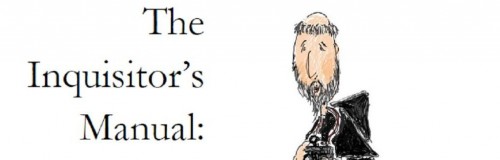
I think I will found an Order. It will be called the Order of Inquisitors.
Ord Inq for short
I have begun to think about exhibitions, about why they are important. They are places where people come and look at your pictures, those chosen with your evaluative criteria, and when they come and see it, and express resonance with them, that says something about that evaluative criteria, which I argue, is mingled with the natural law.
http://cameras.reviewed.com/content/leica-m-a-typ-127-first-impressions-review
THis is the camera for the my kind of photographic institutional focused study. The camer for the job. But for the price, why not get a second hand Leica rangerfinder screw mount or M2 or M3, which is a fraction of the price, and have it CLA’ed? Of course, if you someone will give you this camera for free then this is the best tool for it.
Incomplete manuscript with incomplete referencing for comments.
Designing the “Law”: Overcoming Textolatry in Natural Law and Natural Rights (1980)
Jude Chua Soo Meng
In this paper I tried to make the case that the practice of photography can be employed to overcome, to borrow Vilem Flusser, a kind of weak textolatry inherent in legal texts, such as in Natural Law and Natural Rights (1980) by John Finnis. By putting the photographer-theorist back into the world of sense and by “presence-ing” him, the practice of photography can re-situate him ontologically and semiotically into that life-world of practical thinking in which the natural law shows. It is this grasp of the natural law that is the methodological center-piece in the Design of the law in the philosophy of law, without which Natural Law and Natural Rights (1980) and the new natural law tradition with it appears theoretically vacuous.
I pushed process my ilford hp5 400 and developed it for 800 iso (development time 13:30 min) and it’s turned out great, much finer grain. will post some samples
…is quite something.
Check out his A Philosophy of Photography. Worth a look indeed.
I will be having a paper on photography and new natural law theory appearing in this peer reviewed journal called Signs and Media published by the Institute for Studies in Media and Semiotics, at Sichuan University, China.
http://www.semiotics.net.cn/index.php/isms
Will add a link on the widget when I get news of the offprint.
I think that for the next chapter I need to put out a retraction regarding some earlier musings about the value of the asethetic studium.
I think I overstated the lack of significance of the attractive studium. I should rather have made a distinction between a mere attractive (colorful) preferred image, and the other colorful, intelligible photo. beautiful.
I would still maintain that white and black works better, not that it disregards the beautiful, which it does not, but that it helps us be less obsessed with the beautiful. so that the other intelligible goods can show, and puncture (punctum) us